Scriptural Proofs
Relativity
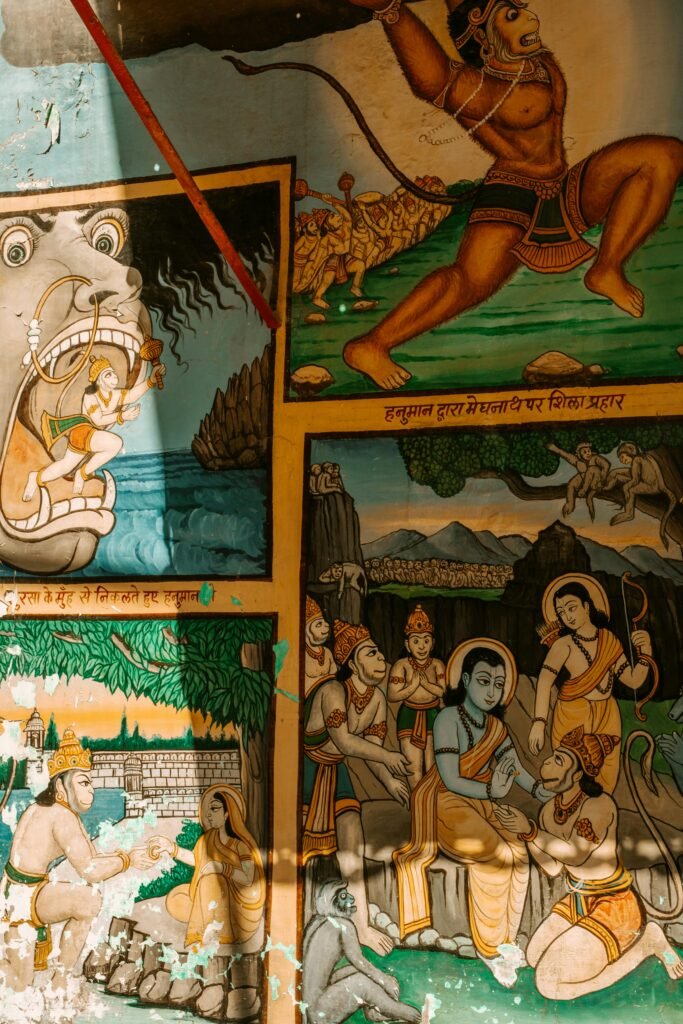
Hanuman’s conversation with Lord Rama
(Adhyātma Rāmāyaṇa)
From the standpoint of the body, however, I am a servant;
From the standpoint of the jīva, (I am) a part of you;
From the standpoint of truth, you indeed am I;
Thus, for me, (this is) the settled understanding.
देह-दृष्ट्या (deha-dṛṣṭyā) from the standpoint of the body / in the view of the body | तु (tu) but / however | दासः अहम् (dāsaḥ aham) I am a servant | जीव-दृष्ट्या (jīva-dṛṣṭyā) from the standpoint of the jīva (individual soul) | त्वत्-अंशकः (tvat-aṁśakaḥ) a part (a portion) of you | तत्त्व-दृष्ट्या (tattva-dṛṣṭyā) from the standpoint of truth/reality | त्वम् एव अहम् tvam eva aham you indeed (are) I / you alone am I | इति (iti) thus मे (me) to me / for me निश्चिता (niścitā) fixed / settled / determined | मति: (matiḥ) thought / opinion / understanding ||
- Each perspective is a mode within the conceptual cascade.
- None are illusory; each has validity within its frame.
- Liberation is not escaping one frame, but recognizing and aligning with the whole cascade.
Superposition
Sama Veda – Chandogya Upanishad 6.2.1 (1)
“O dear one, in the beginning this was Being only, one, without a second.
Some, indeed, say that in the beginning this was Non-Being only — one, without a second.
From that Non-Being, Being was born.”
सत् एव (sat eva) Being alone, only Being | सोम्य (somya) O gentle one / dear one (address to Śvetaketu) | इदम् अग्रे (idam agre) this (universe), in the beginning | आसीत् (āsīt) was | एकम् एव (ekam eva) one only | अद्वितीयम् (advitīyam) without a second, non-dual | तत् (tat) that (statement) | ह (ha) indeed, truly | एके (eke) some (teachers/thinkers) | आहुः (āhuḥ) say, declare | असत् एव (asat eva) Non-Being alone | इदम् अग्रे (idam agre) this (universe), in the beginning | आसीत् (āsīt) was | एकम् एव (ekam eva) one only | अद्वितीयम् (advitīyam) without a second | तस्मात् (tasmāt) from that | असतः (asataḥ) from the Non-Being | सत् (sat) Being | अजायत (ajāyata) was born, came to be||
- Establishment of the non-dual principle, but also its existence and non existence. The very fact that the Upanishad preserves both views instead of erasing one supports our axiom that conceptions emerge in equal and opposite pairs (Duel emergence). Thus, the first unfolding of Brahman is the conceptual superposition of Being and Non-being, not a unilateral emanation.
Rig Veda 10.129.6-7 (2)
“Who truly knows? Who here can declare, from where it has arisen, from where this creation has come?
The gods are later than this world’s emanation, so then, who knows from where it has arisen?”
कः (kaḥ) who | अद्धा (addhā) truly, indeed | वेद (veda) knows | कः (kaḥ) — who | इह (iha) here | प्र वोचत् (pra vocat) can proclaim, declare | कुतः (kutaḥ) from where | आ जाताः (ā jātāḥ) has it come, arisen | कुतः (kutaḥ) from where | इयम् विसृष्टिः (iyam visṛṣṭiḥ) this creation, projection, emanation | अर्वाक् (arvāk) later, afterwards | देवाः (devāḥ) the gods | अस्य विसर्जने (asya visarjane) in this unfolding, discharge, sending forth | अथ (atha) and then, or else | कः वेद (kaḥ veda) who knows | यत् आबभूव (yat ābabhūva) from what it has arisen, come into being ||
- The hymn acknowledges Being/Non-being polarity but refuses to fix a single ground.
- Highlights the epistemic superposition of conception. The origin itself is beyond any one definitive claim.
- Even gods are posterior conceptual nodes in the cascade.
“This creation, which has arisen, perhaps it was fashioned, or perhaps it was not. He who is its overseer in the highest heaven, he indeed may know, or perhaps he does not know.”
इयम् (iyam) this | विसृष्टिः (visṛṣṭiḥ) creation, projection, emanation | यत् (yat) which, that | आबभूव (ābabhūva) has arisen, has come into being | यदि वा (yadi vā) whether, perhaps | दधे (dadhe) it was fashioned, established, laid down | यदि वा न (yadi vā na) or perhaps not, or maybe not | यः (yaḥ) who | अस्य (asya) of this, of it | अध्यक्षः (adhyakṣaḥ) overseer, ruler, witness | परमे (parame) in the highest, supreme | व्योमन् (vyoman) heaven, sky, space | सः (saḥ) he | अङ्ग (aṅga) indeed, surely | वेद (veda) knows | यदि वा (yadi vā) or perhaps | न वेद (na veda) does not know ||
- Even the “overseer in the highest heaven”, a hint at Brahman or a primordial consciousness, may or may not know.
- Origin and non-origin, fashioned and unfashioned, knowable and unknowable coexist as valid conceptual poles.
Bhagavad Gītā 13.12 (3)
ज्नेयम् (jñeyam) that which is to be known | यत् तत् (yat tat) that which | प्रवक्ष्यामि (pravakṣyāmi) I shall declare | यत् ज्ञात्वा (yat jñātvā) knowing which | अमृतम् (amṛtam) immortality | अश्नुते (aśnute) one attains | अनादिमत् (anādimat) beginningless | परम् (param) supreme | ब्रह्म (brahma) Brahman | न (na) not | सत् (sat) being | न (na) nor | असत् (asat) non-being | उच्यते (ucyate) is said to be, is called ||
- Brahman itself transcends conceptual opposites (sat / asat, being / non-being).
- The origin of superposition lies in this paradox, and thus the unfolding creates both.
- Correct knowledge as part of liberation.
Sama Veda – Chandogya Upanishad 6.2.2 (1)
“The father said: ‘O Somya, how indeed could this be so? How could Being come forth from Non-being? In the beginning, O Somya, this (universe) was Being only, one, without a second.’”
कुतः तु खलु (kutas tu khalu) but how indeed, surely from where? | सोम्य (somya) O dear one (Śvetaketu) | एवं स्यात् इति होवाच (evaṃ syād iti hovāca) (the father) said, “how could it be so?” | कथम् (katham) how | असतः (asataḥ) from Non-being | सत् (sat) Being | जायेत (jāyeta) could arise, be born | सत् एव (sat eva) Being alone | सोम्य (somya) O dear one | इदम् अग्रे आसीत् (idam agre āsīt) this (universe), in the beginning, was | एकम् एव अद्वितीयम् (ekam eva advitīyam) one only, without a second ||
In the framework of the conceptual cascade / dual emergence, the very attempt to posit asat immediately superposes its counter-conception sat.
To say “nothing” already requires conceiving “something” (else what would “nothing” contrast against?).
Thus, for the observer embedded in the cascade, the substratum can only travel toward Being, making Non-Being appear impossible.
This is why Uddālaka’s (the father) correction works: he isn’t dismissing asat as a thought, but showing it collapses into sat as soon as you try to hold it.
Conceptual Cascade
Shukla Yajur Veda – Bṛhadāraṇyaka Upanishad 3.9.1 (4)
Sakalya: “How many gods, Yājñavalkya?” Yājñavalkya: “Three hundred and three, and three thousand and three.” Sakalya: “How many gods, Yājñavalkya?” Yājñavalkya: “Thirty-three.” Sakalya: “How many gods?” Yājñavalkya: “Six.” Sakalya: “How many gods?” Yājñavalkya: “Three.” Sakalya: “How many gods?” Yājñavalkya: “Two.” Sakalya: “How many gods?” Yājñavalkya: “One and a half.” Sakalya: “How many gods?” Yājñavalkya: “One.”
अथ (atha) then, thereafter | ह (ha) indeed | एनम् (enam) him | विदग्धः (vidagdhaḥ) the learned, the wise (Vidagdha) | शाकल्यः (śākalyaḥ) Śākalya (name of the sage) | पप्रच्छ (papraccha) asked | कति (kati) how many | देवाः (devāḥ) gods, deities | याज्ञवल्क्य (yājñavalkya) O Yājñavalkya | इति (iti) thus (said) | सः (saḥ) he (Yājñavalkya) | ह (ha) indeed | एतया एव (etayā eva) by this very (hymn/formula) | निविदा (nividā) Nivid (a Vedic litany/listing hymn) | प्रतिपेदे (pratipede) replied, resorted to | यावन्तः (yāvantaḥ) as many as | वैश्वदेवस्य (vaiśvadevasya) of the Viśvedevas (all-gods hymn) | निविदि (nividi) in the Nivid | उच्यन्ते (ucyante) are mentioned, said— | त्रयः च (trayaś ca) three and | त्री च (trī ca) three = together six | शताः (śatāḥ) hundreds | त्रयः च (trayaś ca) three and | त्री च (trī ca) three = together six | सहस्राः (sahasrāḥ) thousands | इति (iti) thus |
ॐ (om) om (sacred assent) | इति (iti) thus | होवाच (hovāca) he said | कति एव (kati eva) how many indeed | देवाः (devāḥ) gods | याज्ञवल्क्य (yājñavalkya) O Yājñavalkya | इति (iti) thus (this line Repeats symbolized by  ) |
) |
त्रयस्त्रिंशत् (trayastriṃśat) thirty-three | इति (iti) thus षट् (ṣaṭ) six | इति (iti) thus त्रयः (trayaḥ) three | इति (iti) thus द्वौ (dvau) two | इति (iti) thus अध्यर्ध (adhyardha) one and a half | इति (iti) thus एकः (ekaḥ) one | इति (iti) thus ||
- Yājñavalkya is conceptually collapsing a multiplicity of functional domains (gods) into progressively more fundamental conceptions, until only the singular, non-dual conception remains.
- Direct evidence of a cascading reality.
Bṛhadāraṇyaka Upanishad 3.9.9 (4)
(Collapsed Logic)
They say: “This one indeed exists as though he were only one.” Then how is he called Adhyardha (‘the one beyond the half, the surpassing one’)? Because in him all this universe flourished, thrived, and grew, therefore he is called Adhyardha. Which, then, is this one god? It is Prāṇa, the Life-Breath. That, indeed, they declare to be Brahman.”
- One and a half. The One refering to Prāṇa, the conception of the life breath, is the substratum in which life can exist, the half being its unfolding. Because Brahman unfolds equally as Existent and Non-Existent, but the observer of Existence (that who uses Prāṇa) cannot know Non-Existence, it can only be known by one and logically understood as half.
Chandogya Upanishad 6.2.3-4 (1)
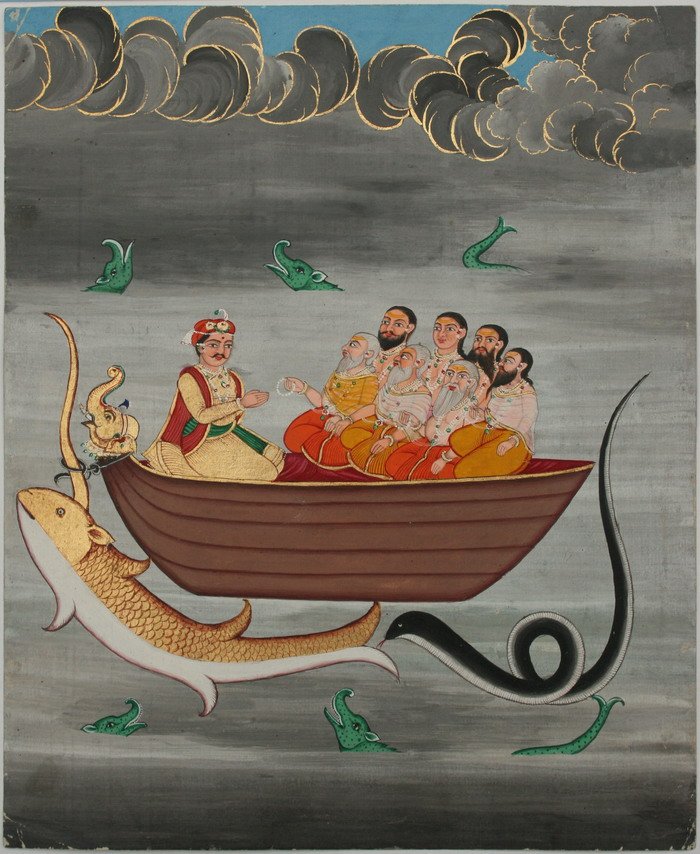
“Then (Brahman) thought: ‘May I become many, may I be born.’ Thus it created fire. That fire thought: ‘May I become many, may I be born.’ Thus it created water…”
“Then those waters thought: ‘May we become many, may we be born.’ Thus they created food. Therefore, wherever it rains, food becomes most abundant. For from water indeed is produced whatever is food.”
तदा ऐक्षत (tadā aikṣata) Then it saw/thought (Brahman conceived) | बहु स्याम् (bahu syām) “May I become many” | प्रजायेय (prajāyeya) “May I be born, produce offspring” | इति (iti) — thus | तत् तेजः असृजत (tat tejo ‘sṛjata) That (Being) created fire/light | तत् तेजः ऐक्षत (tat teja aikṣata) That fire/light conceived/thought | बहु स्याम् प्रजायेय इति (bahu syām prajāyeya iti) “May I become many, may I be born” | तद् आपः असृजत (tad āpaḥ asṛjata) That (fire) created water… |
ता आपः ऐक्षन्त (tā āpaḥ aikṣanta) Those waters thought | बह्व्यः स्याम (bahvyaḥ syāma) “May we become many” | प्रजायेमहि इति (prajāyemahi iti) “May we be born, may we bring forth” thus | ता अन्नम् असृजन्त (tā annam asṛjanta) They created food (matter, gross substance) | तस्मात् (tasmāt) therefore | यत्र क्व च वर्षति (yatra kvaca varṣati) wherever it rains | तत् एव भूयिष्ठम् अन्नम् भवति (tat eva bhūyiṣṭham annam bhavati) there indeed food becomes most abundant | अद्भ्यः एव तत् अधि अन्नाद्यम् जायते (adbhyaḥ eva tat adhi annādyaṃ jāyate) from water indeed food is produced and sustained ||
Recursive Conception Continues
- First Brahman conceived multiplicity → Fire
- Fire conceived multiplicity → Water.
- Water conceived multiplicity → Food (material substance).
- This is the cascade of conceptions leading from subtle to gross. Not the literal element, because material elements do not behave in the way which it aikṣanta or thought into being.
Equal and Opposite Conception (Superposition)
- Each element contains both conception and expression: Fire “burns and illuminates,” Water “flows and condenses,” Food “gives life and decays.”
- This matches HC’s law of conceptual polarity at each layer.
Further Coception Proofs
Bhagavad Gītā – Vibhūti Yoga (10.32 10.33, 10.34, 10.36) (3)
अन्त: (antaḥ) the end | च (ca) and | मध्यं (madhyam) the middle | च (ca) and |
एव (eva) also | अहम् (aham) | अर्जुन (arjuna) O Arjuna |
अध्यात्मविद्या (adhyātma vidyā) the science of Self |
विद्यानाम् (vidyānām) among sciences | वाद: (vādaḥ) logic ||
मृत्युः (mṛtyuḥ) death | सर्वहर: (sarvaharaḥ) all-devouring | च (ca) and | अहम् (aham) I am | उद्भव: (udbhavaḥ) the prosperity | च (ca) and | भविष्यताम् (bhaviṣyatām) of those who are to be prosperous | कीर्तिः (kīrtiḥ) fame | श्री: (śrīḥ) prosperity | वाक् (vāk) speech | च (ca) and | नारीणाम् (nārīṇām) of the feminine | स्मृतिः (smṛtiḥ) memory | मेधा (medhā) intelligence | धृतिः (dhṛtiḥ) firmness | क्षमा (kṣamā) forgiveness ||
I am the gambling of the fraudulent, I am the splendour of the splendid; I am victory; I am effort; I am the goodness of the good.
द्यूतम् (dyūtam) the gambling | छलयताम् (chalayatām) of the fraudulent | अस्मि (asmi) I am | तेज: (tejaḥ) splendour | तेजस्विनाम् (tejasvinām) of the splendid | अहम् (aham) I am | जय: (jayaḥ) victory | अस्मि (asmi) I am | व्यवसाय: (vyavasāyaḥ) effort | अस्मि (asmi) I am | सत्त्वम् (sattvam) the goodness | सत्त्ववताम् (sattvavatām) of the good | अहम् (aham) I am ||
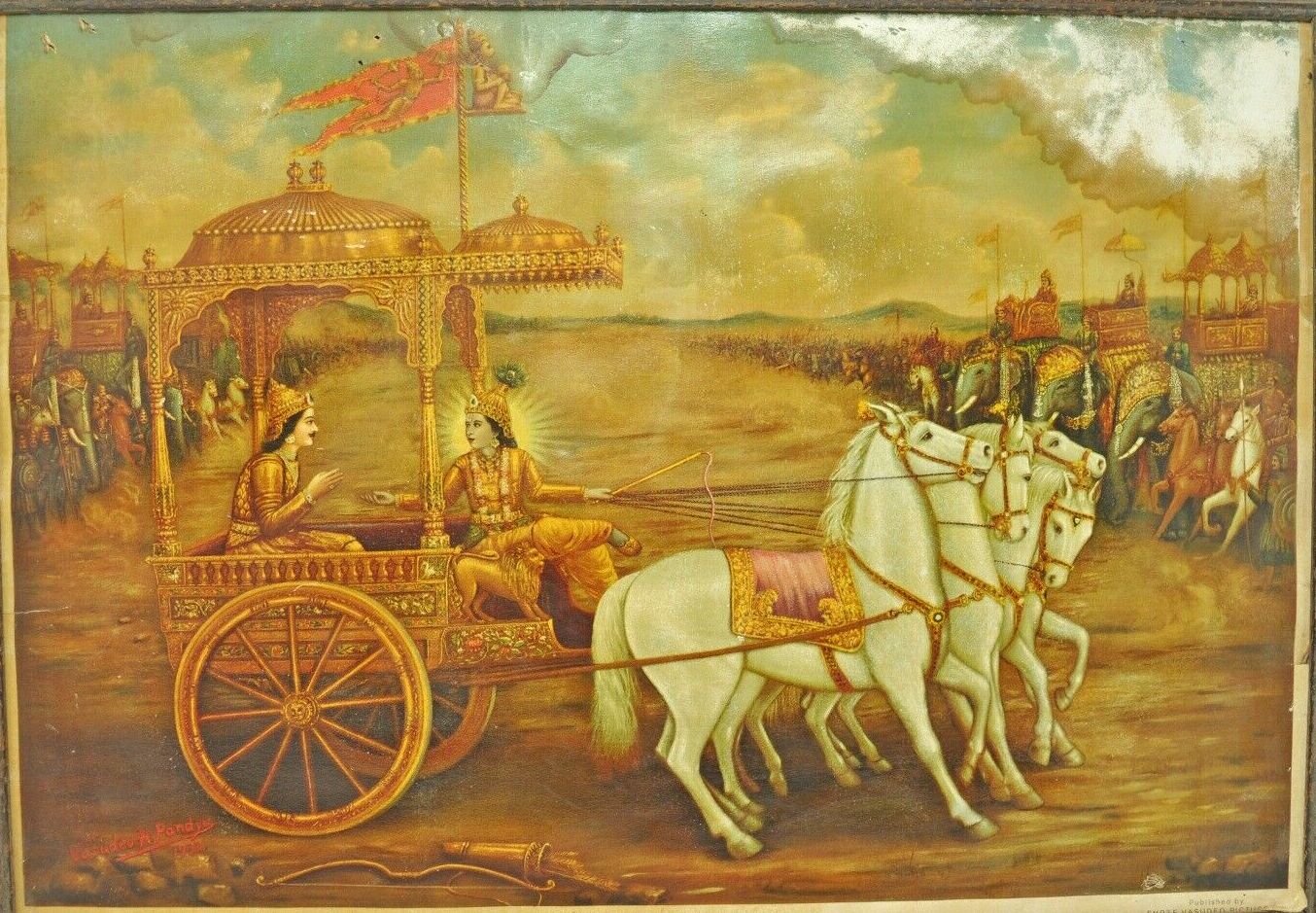
Krishna doesn’t say, “I am this person or that object” , he says, “I am the archetype, the essential conception” within each category.
Every domain Vedic, cosmic, psychological, moral, aesthetic has a singular essence in which he identifies himself.
This is a catalog of conceptual dominions. Language structures (akāraḥ, dvandvaḥ). Cosmic ordering principles (kālaḥ, dhātā). Transformative cycles (mṛtyuḥ, udbhavaḥ). Mental qualities (kīrtiḥ, smṛtiḥ, medhā, etc.). Ethical archetypes (jayaḥ, sattvam).
Cascade Model – Karma – Locus of Intelligence
Atharva Veda – Mundaka Upanishad 1.1.8 (5)
By tapas, Brahman swells; from that, food is born. From food, prāṇa, mind, truth, worlds, and in the works (karma), immortality.
तपसा (tapasā) by tapas (by heat, by austerity, by inner fire of concentration) | चीयते (cīyate) swells, grows, increases, flourishes | ब्रह्म (brahma) Brahman, the Absolute | ततः (tataḥ) from that | अन्नम् (annam) food, matter, sustenance | अभिजायते (abhijāyate) is born, comes forth, originates | अन्नात् (annāt) from food | प्राणः (prāṇaḥ) life-breath, vital force | मनः (manaḥ) mind | सत्यम् (satyam) truth, reality, order | लोकाः (lokāḥ) worlds, realms | कर्मसु (karmasu) in actions, works, karmas | च (ca) and | अमृतम् (amṛtam) immortality, the deathless ||
- Tapas is directly translated to heat, birthed of austerity. Indication of an infinite node of possibility, by its own existence being infinite but fixed, cannot help but expand. The austerity is any moment all of creation becomes one, when Brahman’s night is complete. It then begins to expand as a result of this tapas starting Brahman’s day.
- karmasu ca amṛtam — “and in the works, is immortality.” Amṛtatva (immortality) is situated in, or manifest through, karma itself.
- Every act links into the chain of cause, and the chain itself is imperishable.
- Karma is not merely cause and effect but the force of expansion from Tapas, and immortality is its inevitable dimension.
Mundaka Upanishad 1.1.9 (5)
He who is all-knowing, the source of all knowledge, whose tapas (heat) is of the very nature of knowledge (jñānamayaṃ tāpaḥ). From that are born this Brahman, name, form, and food (substance).
- etad brahma = “this Brahman” makes Brahman into a discernible subject, the One that acts as a fixed node. Brahman in its neuter form, declined as brahma. It’s nominative singular, so it points to Brahman as an entity (not just an abstract principle).
- ontological anchor: the cascade is not random, but sourced in a conscious node of intelligence.
Tapas cīyate (1.1.8): The infinite node of possibility that cannot but expand. This is the first pulse of conception.
Tapas jñānamaya (1.1.9): The same power, but already shaped into knowing, the Locus of Intelligence that makes distinctions of nāma-rūpa (name-form).
From this, all Gods within the cascade operate.
Ontological Design Logic
Devī Bhāgavata Purāṇa 7.32.19–22 (6)
“Because unbounded, I am held to be non-dual. And Knowledge is not a Dharma (property) of the Self (the notion of) Dharma belongs to the inert; Knowledge is just Consciousness itself. Therefore the Self is ever of the form of Knowledge and of Bliss, Truth, Full, undecaying, free from the whole net of attachments. Yet, joined with its own Māyā, with desire and karma, due to prior saṃskāras, time, and lack of discrimination, (it turns toward creation).”
अपरिच्छिन्नता (aparicchinnatā) unlimitedness / non-boundedness | अद्वैतम् (advaitam) non-dual / without a second | एव (eva) indeed / only | मतम् (matam) considered / understood | मम (mama) by me | तत् (tat) that | च (ca) and | ज्ञानम् (jñānam) knowledge | न (na) not | आत्म-धर्मा (ātma-dharmā) attribute of the Self |धर्मत्वे (dharmatve) in the sense of being a property / quality | जड-आत्मनः (jaḍātmanaḥ) of an inert self ||
ज्ञानस्य (jñānasya) of knowledge / of consciousness (genitive case) | जडरूपत्वं (jaḍa-rūpatvam) the state/nature of being inert/matter-like | न दृष्टं (na dṛṣṭam) is not seen, not observed | न च सम्भवितम् (na ca sambhavitam) nor is it possible, nor can it be | चिद्रूपत्वं (cid-rūpatvam) the nature/condition of being Consciousness | तथा नास्ति (tathā nāsti) likewise, it is not (as something separate) | चितात् (cit-āt) from Consciousness itself | श्रेष्ठं (śreṣṭham) superior, higher, beyond | हि (hi) indeed, surely | विद्यते (vidyate) – exists, is present ||
तस्मात् (tasmāt) therefore, hence आत्मा (ātmā) the Self ज्ञानरूपः (jñāna-rūpaḥ) of the form of Knowledge/Consciousness सुखरूपश्च (sukha-rūpaś ca) and of the form of Bliss सर्वदा (sarvadā) always, at all times सत्यः (satyaḥ) Truth, Reality पूर्णः (pūrṇaḥ) Full, Complete अव्ययः (avyayaḥ) undecaying, inexhaustible सङ्गः (saṅgaḥ) attachment, association छाया (chāyā) shadow एत-जाल-विवर्जितः (etajāla-vivarjitaḥ) devoid of this entire net/web (of illusion) ||
सः (saḥ) that (Ātman) | पुनः (punaḥ) again, however | काम (kāma) desire | कर्म (karma) action, deed | आदि (ādi) etc., and so on | युक्तया (yuktayā) joined/connected with | स्वीय-मायया (svīya-māyayā) with its own Māyā | पूर्व-अभिभूत-संस्कारात् (pūrva-abhibhūta-saṃskārāt) due to prior impressions (saṃskāras) काल (kāla) time कर्म (karma) action विवाकतः (vivākataḥ) because of the absence of discrimination (or discernment) ||
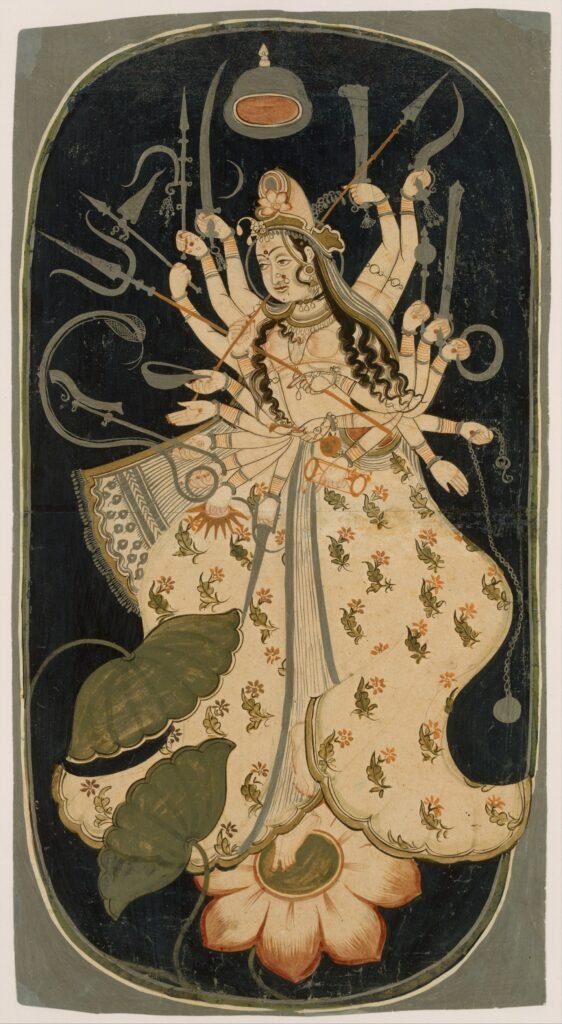
- The capacity for knowledge, and therefore conceptual structure, is inseparable from ultimate reality. This directly supports that the conceptual cascade is not a separate framework.
- Conceptual reality (jñāna) is not reducible to matter, physical reality is one mode of a deeper, ontologically real conceptual field. Reframes Māyā not as illusion, but as the activation of conceptual potential into structured manifestation.
- Creation is not arbitrary; it unfolds according to the inherent logic of Brahman’s own jñāna.
- Karmic recursion: manifestations are shaped by existing configurations (Saṁskāras) and operate within structured cycles of time and causality. It is the very scaffolding of the conceptual cascade.
- Shows how a person’s design and their journey in finding it is all within a purposed logic.
Bases of Liberation
Śrīmad Devī Bhāgavatam 7.39.14 (6)
“But, O King, I cannot be attained by mere Karma alone. From Dharma arises Bhakti, and from Bhakti arises the Highest Jñāna.”
प्राप्य (prāpya) to be attained / obtained | अहम् (aham) I | सर्वथा (sarvathā) in every way by all means | राजन् (rājan) O King (Himavān, mountain king) | तु (tu) but | केवल-कर्मभिः (kevala-karmabhiḥ) by work (karma) alone, unaccompanied |
धर्मात् (dharmāt) from Dharma | संजायते (sañjāyate) arises, is born | भक्तिः (bhaktiḥ) devotion (Bhakti) | भक्तेः (bhakteḥ) from Bhakti | संजायते (sañjāyate) arises, is born | परम् (ज्ञानम्) (param [jñānam]) the Highest (knowledge, Jñāna) ||
- Rejection of purely mechanical or ritualistic practice without alignment. Action (karma) without alignment to one’s conceptual design will not lead to liberation. Action however is start of this chain.
- Dharma here is not merely social duty, but alignment with the structural logic of reality. When one’s conceptual configuration is in harmony with the infinite’s logic, devotion arises naturally as resonance with the source.
- Highest jñāna is full realization of the conceptual cascade as Brahman’s nature. Bhakti is the deep alignment and emotional surrender that removes distortion, allowing direct perception of that truth.
- That means liberation is not simply intellectual realization, but the fruit of structural alignment and lived devotion.
- Devi states that highest jñāna comes after dharma and bhakti. That supports HC’s view that realization is the culmination of alignment, not an isolated flash of realization.
Yajur Veda – Taittiriya Upanishad Book 1.11.3 – Shiksha Valli (7)
“From self-study, do not be negligent. Having brought dear wealth to the teacher, do not cut off the thread of progeny. From truth, do not be negligent. From dharma, do not be negligent. From welfare (good conduct, right action), do not be negligent. For prosperity, do not be negligent. From self-study and from teaching, do not be negligent. From duties to the Devas and to the Pitṛs (ancestors), do not be negligent.”
स्वाध्यायात् (svādhyāyāt) from self-study, recitation of sacred texts, | मा (mā) do not, | प्रमदः (pramadaḥ) be negligent, be careless, | आचार्याय (ācāryāya) to the teacher, preceptor, | प्रियं (priyam) dear, beloved, pleasing, | धनम् (dhanam) wealth, gift, | आहृत्य (āhṛtya) having brought, having offered, | प्रजातन्तुं (prajātantuṃ) the thread of progeny, lineage, | मा (mā) do not, | व्यवच्छेत्सीः (vyavacchetsīḥ) cut off, break, sever, | सत्यāt (satyāt) from truth, | न (na) not, | प्रमदितव्यम् (pramaditavyam) one should be negligent, deviate, | धर्मāt (dharmāt) from dharma (righteousness, duty), | न (na) not, | प्रमदितव्यम् (pramaditavyam) one should be negligent, deviate, | कुशलāt (kuśalāt) from welfare, skill, good conduct, | न (na) not, | प्रमदितव्यम् (pramaditavyam) one should be negligent, deviate, | भूत्यै (bhūtyai) | for prosperity, well-being, abundance | न (na) not, | प्रमदितव्यम् (pramaditavyam) one should be negligent, deviate, | न (na) not | स्वाध्यायप्रवचनाभ्यां (svādhyāya-pravacanābhyām) from self-study and from teaching (recitation and exposition of scripture), | न (na) not, प्रमदितव्यम् (pramaditavyam) one should be negligent, deviate, देवपितृकार्याभ्यां (deva-pitṛ-kāryābhyām) from duties to the Devas and to the Pitṛs (ancestors), न (na) not, प्रमदितव्यम् (pramaditavyam) one should be negligent, deviate.
- Self-study (svādhyāya) is the conscious recalibration of one’s conceptual design. In HC, this is not merely reading scripture but realigning perception with the structural truth of reality
- “Thread of progeny” and the offering to teachers is a direct call to one of the characteristics highlighted in ‘Dharmic Liberation’
- From Truth (satya) is fidelity to the coherence of the whole, living without distortion from one’s ontologically real conceptual design.
- “From Dharma”, derived from self-study, is not a fixed social rule but the unique path that maintains coherence between self, action, and the infinite’s structural logic.
- Welfare is also derived from self-study. From understanding the self one can care for the well-being of others.
- Prosperity is conceptual consistency, where contradiction is absent.
- Svādhyāya, self-study, repeated again, reinforcement.
- The Gods and those who came before are never lost in the process.
Bhagavad Gītā 6.6
बन्धुः (bandhuḥ) friend, companion | आत्मा (ātmā) the self | आत्मनः (ātmanaḥ) of the self | तस्य (tasya) of him, his | येन (yena) by whom | आत्मा (ātmā) the self | एव (eva) indeed, even, only | आत्मना (ātmanā) by the self | जितः (jitaḥ) conquered, subdued | अनात्मनः (anātmanaḥ) of the unconquered self, of one without self-control | तु (tu) but | शत्रुत्वे (śatrutve) in enmity, in the place of an enemy | वर्तेत (varteta) would remain, would act | आत्मा (ātmā) the self | एव (eva) indeed, certainly, only | शत्रुवत् (śatruvat) like an enemy
- Ontological Design: The verse recognizes that the ātman (self) has an innate structure, a design that aligns with Dharma. When this design is respected and followed through discipline (ātmanā jitaḥ, conquered by the self), the self becomes its own bandhuḥ (friend).
- Social Conditioning (Anātman, external overlays): When one fails to subdue conditioning; impulses, social habits, imposed norms (anātmanah), then the self (ātmā) is distorted. It no longer aligns with its own conceptual design and instead takes the position of a śatruḥ (enemy).
- Meaning of “Enemy” Here: The self turned against itself through contradiction: the natural design of the self is pulled away by the forces of conditioning, desires, and unexamined habits. This is Suffering.
Inaction – Worst than Adharma
Bhagavad Gītā 3.37
कामः (kāmaḥ) desire | एषः (eṣaḥ) this | क्रोधः (krodhaḥ) anger | एषः (eṣaḥ) this | रजोगुणसमुद्भवः (rajo-guṇa-samudbhavaḥ) born of the Rajo-guṇa (quality of passion) | महाशनः (mahāśanaḥ) all-devouring, all-consuming | महापाप्मा (mahāpāpmā) all-sinful, greatly sinful | विद्धि (viddhi) know | एनम् (enam) this | इह (iha) here (on earth) | वैरिणम् (vairiṇam) as the foe, enemy ||
However, Krishna later says.
Bhagavad Gītā 14.8
“But know Tamas (inertia) to be born of ignorance, deluding all embodied beings. It binds, O Bhārata, by heedlessness, indolence, and sleep.”
तमः (tamaḥ) inertia, darkness | तु (tu) but | अज्ञानजम् (ajñānajam) born of ignorance | विद्धि (viddhi) know (you should understand) | मोहनम् (mohanam) deluding, bewildering | सर्वदेहिनाम् (sarva-dehinām) of all embodied beings |प्रमाद (pramāda) heedlessness, negligence | आलस्य (ālasya) laziness, indolence | निद्राभिः (nidrābhiḥ) by sleep | तत् (tat) that (tamas) | निबध्नाति (nibadhnāti) binds, fastens | भारत (bhārata) O Bhārata (Arjuna) ||
“Those who are established in Sattva rise upwards; the Rajasic remain in the middle; and those abiding in the lowest quality, Tamas, go downwards.”
ऊर्ध्वम् (ūrdhvam) upwards, higher | गच्छन्ति (gacchanti) go | सत्त्वस्था: (sattvasthāḥ) those established in Sattva | मध्ये (madhye) in the middle | तिष्ठन्ति (tiṣṭhanti) remain, dwell | राजसाः (rājasāḥ) those dominated by Rajas | जघन्य (jaghanya) base, lowest | गुण (guṇa) of quality | वृत्ति (vṛtti) function, mode of life | स्था: (sthāḥ) abiding, fixed | अधः (adhaḥ) downwards, lower | गच्छन्ति (gacchanti) go | तामसाः (tāmasāḥ) those dominated by Tamas ||
- Karma is kinetic, it is the river flowing, the direct defiance of this nature is more painful than action by any flavor.
Inaction = refusal of polarity (collapse of conceptual cascade).
Evil = misaligned polarity (but still generates karmic learning for the whole).
Dharma = aligned polarity (liberation through clarity).
Action as Most Important -Dharmic Purpose as Liberation Throughout Bhagavad Gītā
2.47
“You have authority only in action, never at any time in the fruits. Let not the fruit of action be your motive, nor let your attachment be to inaction.”
कर्मणि (karmaṇi) in action / in work | एव (eva) only | अधिकारः (adhikāraḥ) right, authority, entitlement | ते (te) of you / yours | मा (mā) not फलेषु (phaleṣu) in the fruits / results | कदाचन (kadācana) at any time, ever | मा (mā) not | कर्मफलहेतु: (karma-phala-hetuḥ) the cause/motive of the fruits of action | भूः (bhūḥ) be, become | मा (mā) not | ते (te) your | सङ्गः (saṅgaḥ) attachment, clinging | अस्तु (astu) let there be | अकर्मणि (akarmaṇi) in inaction / non-doing ||
- Shows that liberation lies in acting fully without clinging to results. Perfection of action itself is freedom.
2.50
“The wise one, endowed with discrimination, here in this life casts off both good and evil deeds. Therefore devote yourself to yoga; for yoga is skill in action.”
बुद्धियुक्तः (buddhiyuktaḥ) endowed with wisdom | जहाति (jahāti) casts off, abandons | इह (iha) here, in this life | उभे (ubhe) both | सुकृत-दुष्कृते (sukṛta-duṣkṛte) good and evil deeds | तस्मात् (tasmāt) therefore | योगाय (yogāya) to yoga | युज्यस्व (yujyasva) devote / apply yourself | योगः (yogaḥ) yoga | कर्मसु (karmasu) in actions | कौशलम् (kauśalam) skill, proficiency, perfection ||
- “Skill in action” (karmasu kauśalam) = perfection of duty → Dharma perfected = Mokṣa.
3.19
“Therefore, without attachment, constantly perform your obligatory duty; for, indeed, by performing action without attachment, man attains the Supreme.”
- Selfless performance of duty purifies and liberates.
“Better is one’s own duty, though devoid of merit, than the duty of another well performed. Better is death in one’s own duty; another’s duty is fraught with fear.”
- Liberation lies in the perfection of one’s own role/duty, the conceptual design, not in copying others.
“Thus knowing, action was performed even by the ancient seekers of liberation; therefore, you too should perform action, just as it was performed in ancient times by the ancients.”
- Krishna is making clear that even those who knew the truth, the liberated sages, still acted in the world. They didn’t renounce duty or fall into inaction.
“Renunciation and yoga of action both lead to the highest bliss; but of the two, yoga of action is superior to the renunciation of action.”
- Krishna’s preference: while renunciation has its place, it is performing one’s action (svadharma) that is higher and safer.
When action is aligned with one’s own duty (svakarma), it becomes worship of the Divine.
Dharma is the pathway to perfection: living one’s role in harmony with the cosmic order.
Liberation is through perfection in duty: Siddhi here is not just worldly success, it is the spiritual perfection that prepares one for mokṣa.
- Imperfection is not a fault: Even if your action/duty is flawed, it is spiritually superior to borrowing another’s path.
- Your unique nature determines your role in the cosmic order. Fulfilling it keeps harmony.
- Doing your own duty, even imperfectly, keeps you aligned with dharma and prevents karmic bondage.
All translations are done on my own, word for word in isolation through both a dictionary and website, both are cited below. Books where I found scriptures in are below.
Citation
Works Cited
“Bhagavad Gita Commentary by Swami Chidbhavananda : Swami Chidbhavananda : Free Download, Borrow, and Streaming : Internet Archive.” Internet Archive, 23 Oct. 1921, archive.org/details/the-bhagavad-gita-commentary-swami-chidbhavananda/page/240/mode/2up. Accessed 28 Aug. 2025. (3) I use the physical copy.
“Devi-Bhagavata-Purana-1-Sanskrit-Text-With-English-Translation_compress : Free Download, Borrow, and Streaming : Internet Archive.” Internet Archive, 2022, archive.org/details/devi-bhagavata-purana-1-sanskrit-text-with-english-translation_compress/devi-bhagavata-purana-1-sanskrit-text-with-english-translation_compress/page/197/mode/2up. Accessed 28 Aug. 2025. (6).
Madhavananda, Swami, et al. The Br̥hadāraṇyaka Upaniṣad. Calcutta, Advaita Ashrama, 2004. (4).
Monier Monier-Williams, et al. A Sanskrit-English Dictionary : Etymologically and Philologically Arranged with Special Reference to Cognate Indo-European Languages : New Edition, Greatly Enlarged and Improved. Delhi, Motilal Banarsidass, 2002.
Ravi Prakash Arya, et al. R̥gveda-Saṃhitā. H. H. Wilson, 1997. (2).
Śaṅkarācārya, et al. The Taittiriya Upanishad. A. Mahadeva Sastri, 1980. (7).
Śaṅkarācārya, and Lokeśvarānanda. Chāndogya Upaniṣad : Translated and with Notes Based on Śaṅkara’s Commentary. Calcutta, Ramakrishna Mission Institute of Culture, 1998. (1).
“Sanskrit Dictionary for Spoken Sanskrit.” Www.learnsanskrit.cc, www.learnsanskrit.cc/. Website used for translation.
www.wisdomlib.org. “Mundaka Upanishad with Shankara’s Commentary.” Wisdomlib.org, 21 Feb. 2016, www.wisdomlib.org/hinduism/book/mundaka-upanishad-shankara-bhashya. (5).